36 Results for "

Stephania tetrandra S. Moore

" in MedChemExpress (MCE) Product Catalog:
Products (36)

36 Results for "Stephania tetrandra S. Moore" in MCE Product Catalog:

14
14 Publications Verification
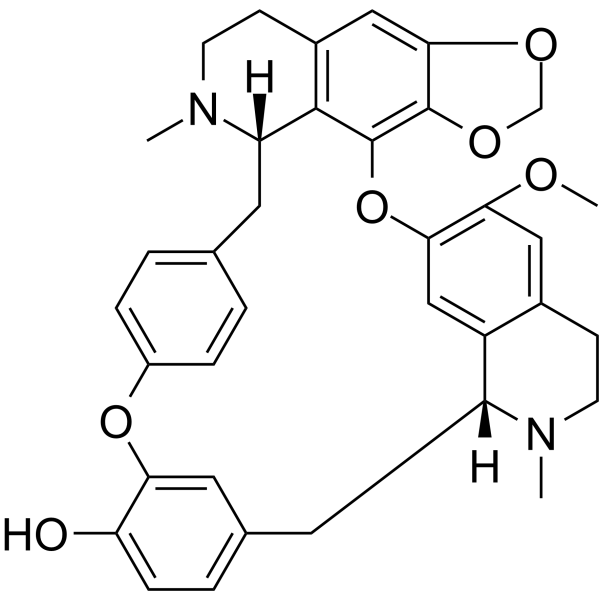
Cat. No.: HY-N6972
CAS No.: 481-49-2
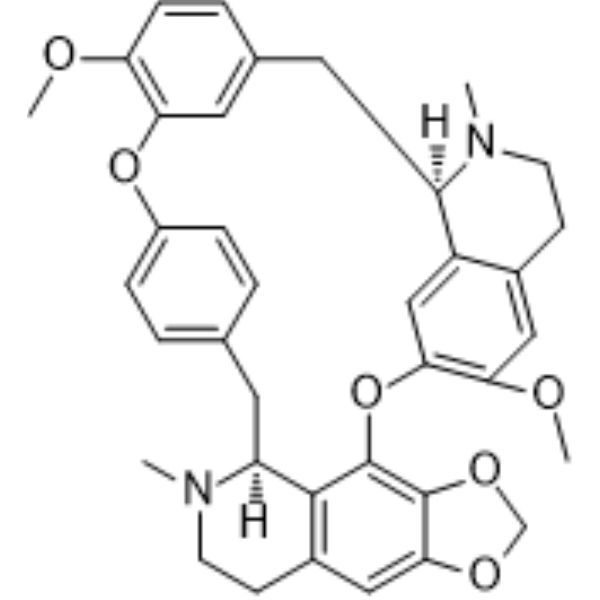
Cepharanthine is a natural product that can be isolated from the plant Stephania cephalantha Hayata. Cepharanthine has anti-severe acute respiratory syndrome coronavirus 2 (anti-SARS-CoV-2) activities. Cepharanthine has good effective in suppressing viral proliferation (half maximal (50%) inhibitory concentration (IC50) and 90% inhibitory concentration (IC90) values of 1.90 and 4.46 μM . Cepharanthine can also effectively reverses P-gp-mediated multidrug resistance in K562 cells and increase enhances the sensitivity of anticancer agents in xenograft mice model . Cepharanthine shows inhibitory effects of human liver cytochrome P450 enzymes CYP3A4, CYP2E1 and CYP2C9. Cepharanthine has antitumor, anti-inflammatory and antinociceptive effects .
loading...
    loading...
11
11 Cited Publications
Cat. No.: HY-N1372A
CAS No.: 436-77-1
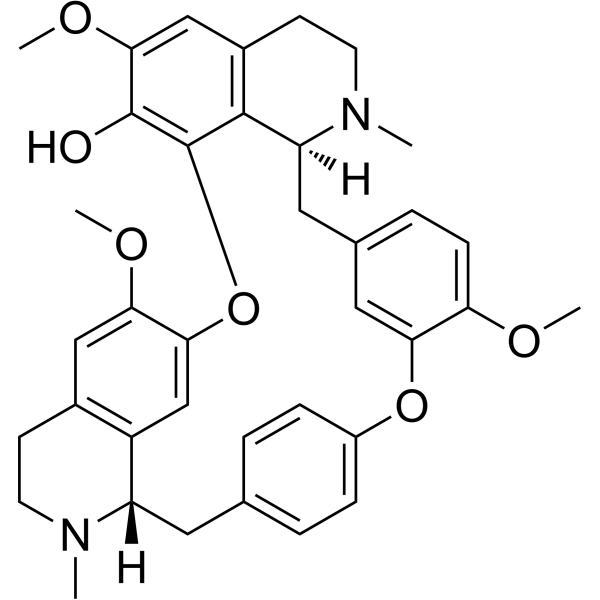
Fangchinoline is isolated from Stephania tetrandra with extensive biological activities, such as enhancing immunity, anti-inflammatory sterilization and anti-atherosclerosis. Fangchinoline, a novel HIV-1 inhibitor, inhibits HIV-1 replication by impairing gp160 proteolytic processing . Fangchinoline targets Focal adhesion kinase (FAK) and suppresses FAK-mediated signaling pathway in tumor cells which highly expressed FAK . Fangchinoline induces apoptosis and adaptive autophagy in bladder cancer .
loading...
    loading...
5
5 Cited Publications
Cat. No.: HY-N2255
CAS No.: 25127-29-1
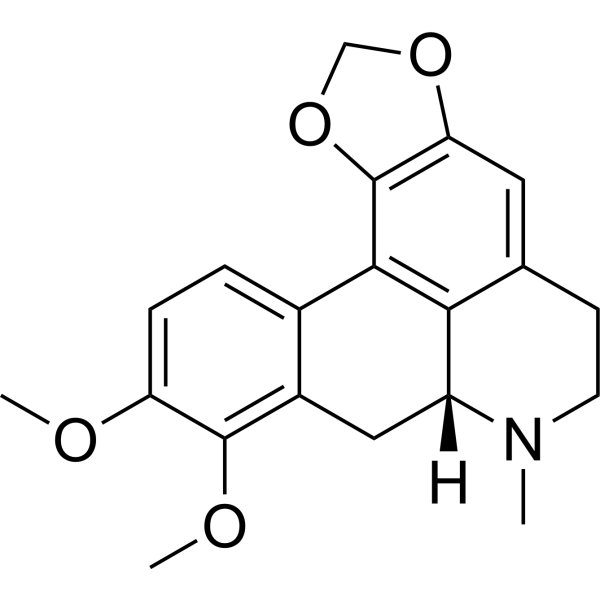
Crebanine is an isoquinoline-like alkaloid that can be derived from Stephania. Crebanine is an antagonist of the α7-nAChR with an IC50 of 19.1 μM. Crebanine suppresses the proliferation, migration, and invasion of cancer cells, triggers reactive oxygen species (ROS) burst, and promotes apoptosis. Crebanine inhibits the AKT/FoxO3a, NF-κB and MAPK signaling pathways. Crebanine attenuates NOX2 hyperactivation, exhibits antioxidant properties by reducing reactive oxygen species and peroxidation in microglia cells. Crebanine inhibits voltage-dependent Na + current in guinea-pig ventricular myocytes. Crebanine has high inhibitory activity against gram-positive animal pathogenic bacteria. Crebanine ameliorates ischemia-reperfusion brain damage in middle cerebral artery occlusion and reperfusion (MCAO/R) rats. Crebanine significantly improves Scopolamine (HY-N0296)-induced cognitive deficits in ICR mice. Crebanine can be used for the study of hepatocellular carcinoma (HCC), cerebral ischemia and Alzheimer's disease .
loading...
    loading...
3
3 Cited Publications
Cat. No.: HY-N6045
CAS No.: 477-57-6
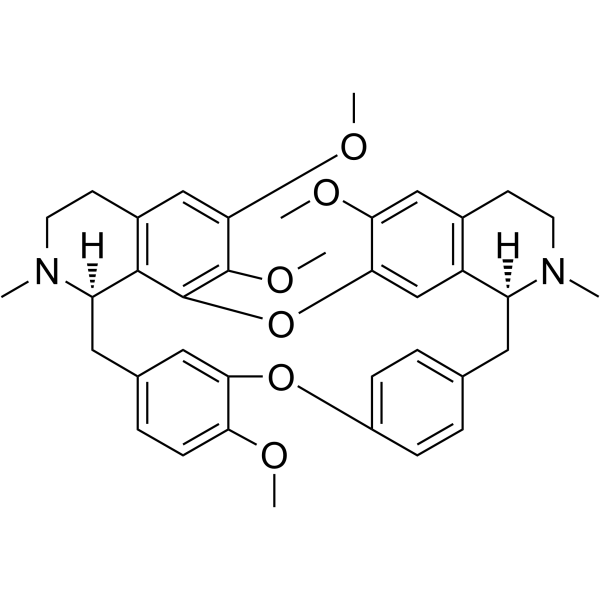
Isotetrandrine is a bioactive component in Stephania tetrandra .
loading...
    loading...
1
1 Cited Publications
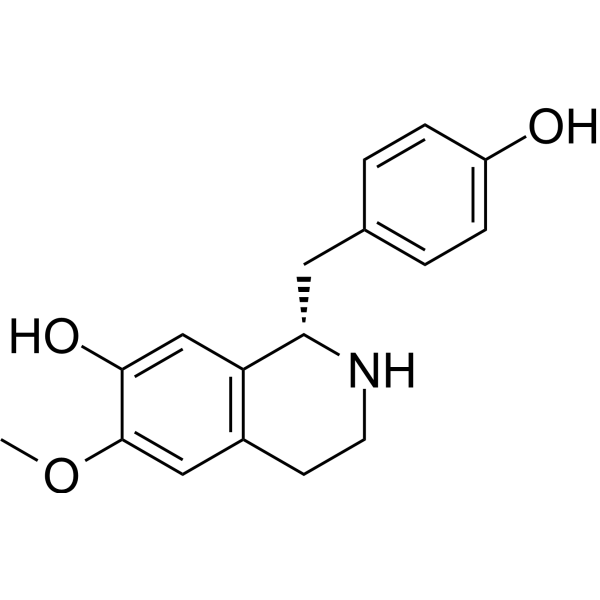
Cat. No.: HY-N3610
CAS No.: 486-39-5
Coclaurine is a class of tetrahydroisoquinoline alkaloids that can be isolated from Sarcopetalum harveyanum with anticancer activity. Coclaurine is a nicotinic acetylcholine receptor (nAChRs) antagonist. Coclaurine is a key molecule in S. tetrandra responsible for EFHD2 inhibition. Coclaurine can downregulate EFHD2-related NOX4-ABCC1 signaling and enhanced Cisplatin (HY-17394) sensitivity. Coclaurine suppresses the stemness and metastatic properties of NSCLC cells. Coclaurine disrupts the interaction between the transcription factor FOXG1 and the EFHD2 promoter, leading to a reduction in EFHD2 transcription .
loading...
    loading...
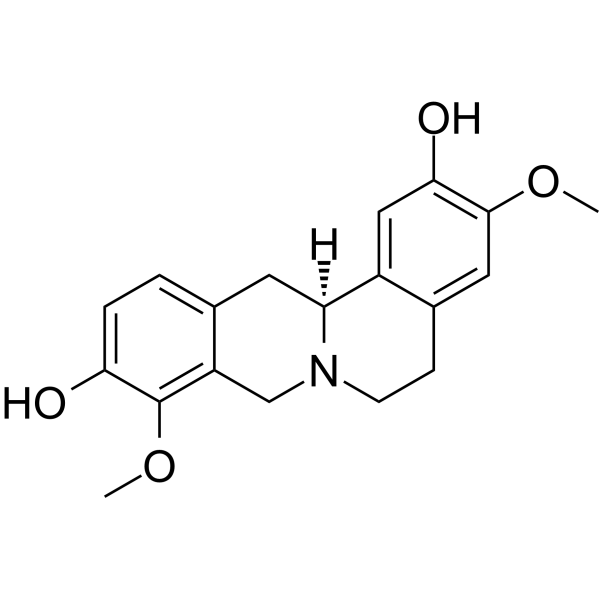
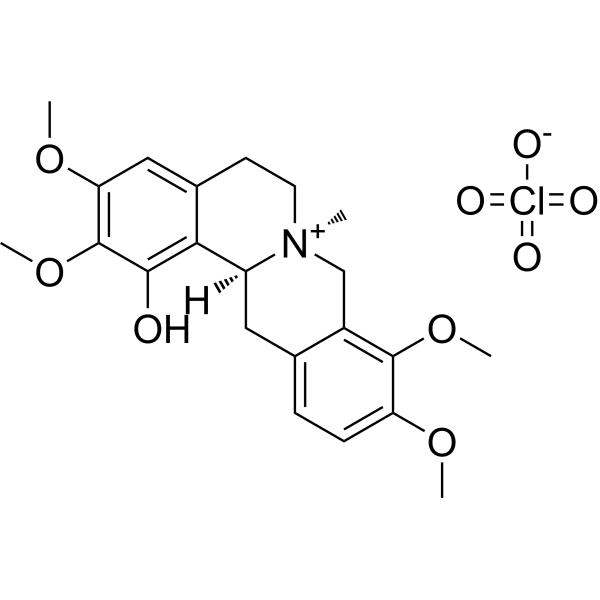
Cat. No.: HY-N6960
CAS No.: 16562-13-3
Synonyms: Stepholidine; (-)-Stepholidine; L-SPD
L-Stepholidine (Stepholidine) is an alkaloid. L-Stepholidine exhibits mixed dopamine D1 receptor agonist and D2 antagonist properties. L-Stepholidine has neuroprotective effect. L-Stepholidine can be used for the researches of neurological disease, such as Parkinson disease, Alzheimer's disease and opiate addiction .
loading...
    loading...
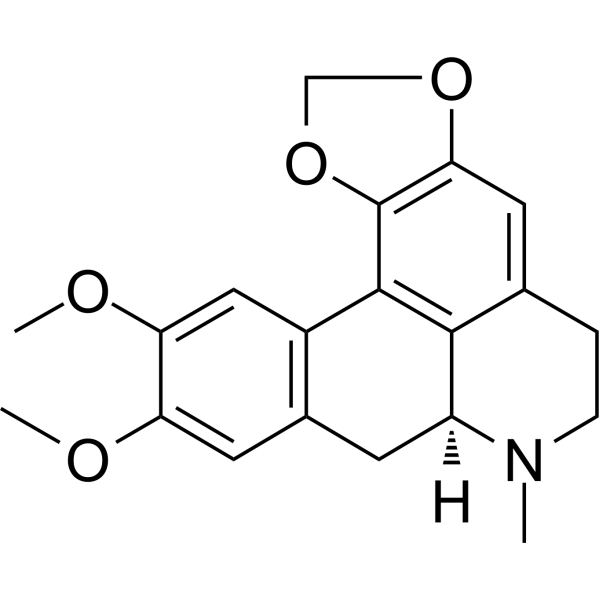
Cat. No.: HY-N6969
CAS No.: 517-66-8
Dicentrine is a natural product isolated from the plant Stephania epigaea Lo with antihypertensive effect. Dicentrine is an α1-adrenoceptor antagonist which has effective against human hyperplastic prostates .
loading...
    loading...
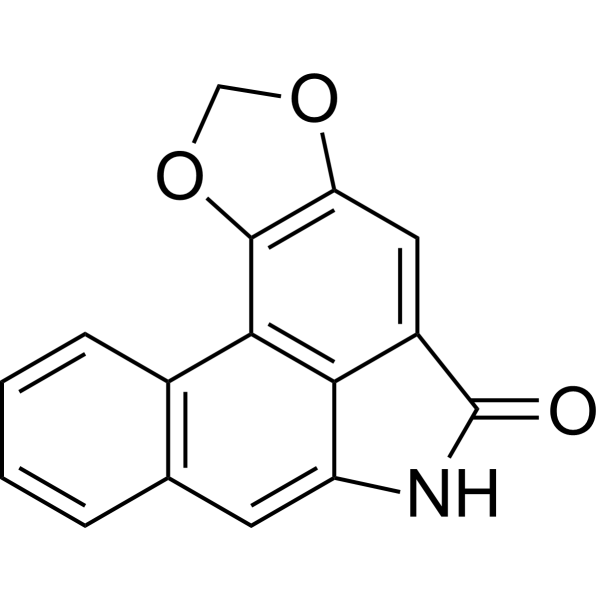
Cat. No.: HY-N11562
CAS No.: 55610-00-9
Aristololactam II is an aristololactam-related blue-fluorescent compound found in the callus tissue of Stephania cepharantha .
loading...
    loading...
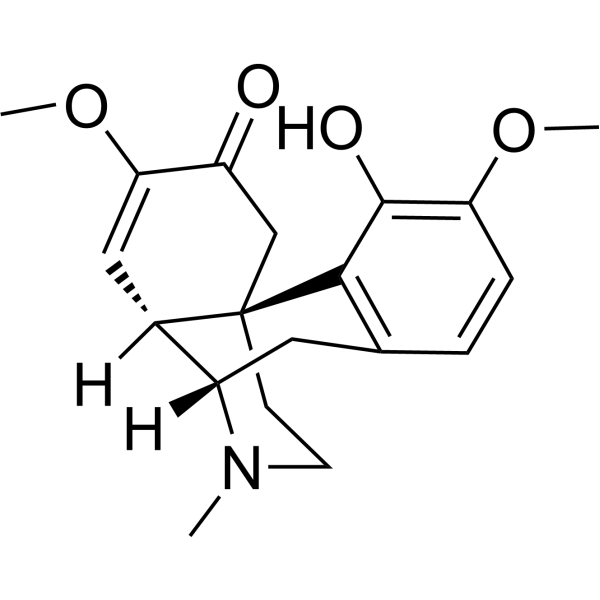
Cat. No.: HY-N11132
CAS No.: 60761-53-7
14-Episinomenine is an alkaloid that can be isolated from Stephania cepharantha .
loading...
    loading...
Cat. No.: HY-N8239
CAS No.: 27686-34-6
Cepharanoline is a compound isolated from Stephania cepharantha Hayata. Cepharanoline has proliferative activities .
loading...
    loading...
Cat. No.: HY-N11131
CAS No.: 267007-51-2
9-O-Methylstecepharine (compound 7) is an alkaloid that can be found in Stephania cepharantha .
loading...
    loading...
Cat. No.: HY-N1372AR
CAS No.: 436-77-1
Fangchinoline (Standard) is the analytical standard of Fangchinoline. This product is intended for research and analytical applications. Fangchinoline is isolated from Stephania tetrandra with extensive biological activities, such as enhancing immunity, anti-inflammatory sterilization and anti-atherosclerosis. Fangchinoline, a novel HIV-1 inhibitor, inhibits HIV-1 replication by impairing gp160 proteolytic processing . Fangchinoline targets Focal adhesion kinase (FAK) and suppresses FAK-mediated signaling pathway in tumor cells which highly expressed FAK . Fangchinoline induces apoptosis and adaptive autophagy in bladder cancer .
loading...
    loading...
Cat. No.: HY-169354
CAS No.: 143663-00-7
Lariciresinol 4-O-β-D-glucopyranoside is a natural lignan glucoside found in the leaves and stems of Symplocos cochinchinensis (Lour.) S. Moore .
loading...
    loading...
Cat. No.: HY-N6972R
CAS No.: 481-49-2
Cepharanthine (Standard) is the analytical standard of Cepharanthine. This product is intended for research and analytical applications. Cepharanthine is a natural product that can be isolated from the plant Stephania?cephalantha?Hayata. Cepharanthine has anti-severe acute respiratory syndrome coronavirus 2 (anti-SARS-CoV-2) activities. Cepharanthine has good effective in suppressing viral proliferation (half maximal (50%) inhibitory concentration (IC50) and 90% inhibitory concentration (IC90) values of 1.90 and 4.46?μM . Cepharanthine can also effectively reverses P-gp-mediated multidrug resistance in K562 cells and increase enhances the sensitivity of anticancer agents in xenograft mice model . Cepharanthine shows inhibitory effects of human liver cytochrome P450 enzymes CYP3A4, CYP2E1 and CYP2C9. Cepharanthine has antitumor, anti-inflammatory and antinociceptive effects .
loading...
    loading...
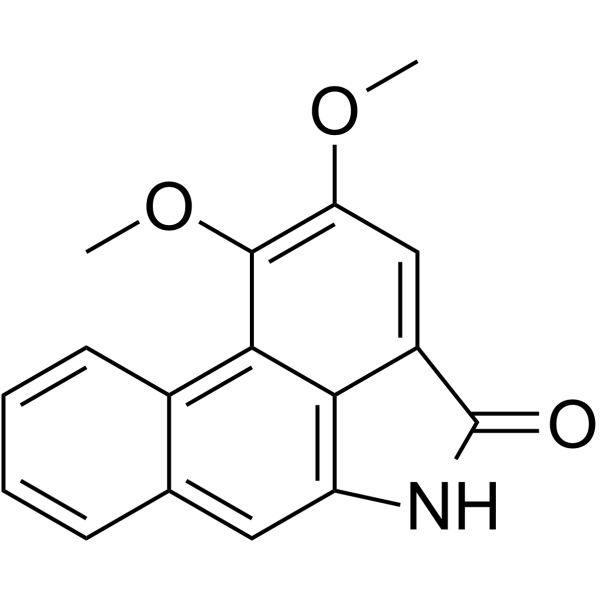
Cat. No.: HY-N2893
CAS No.: 53948-09-7
Synonyms: Aristolactam B II
Cepharanone B is a fluorescent component isolated from the callus tissue of stephania cephaiuntha .
loading...
    loading...
Cat. No.: HY-N3185
CAS No.: 86537-66-8
N-Methylcalycinine is a nature product with AChE inhibitory activity. N-Methylcalycinine can be isolated from the roots of Stephania epigaea. N-Methylcalycinine can be used for the research of asthma, cancer, dysentery, fever, hyperglycemia, intestinal complaints, inflammation, sleep disturbances, tuberculosis and so on .
loading...
    loading...
Cat. No.: HY-N9219
CAS No.: 35040-32-5
2,5-Dihydroxyxanthone is a Xanthones product that can be isolated from the stem barks of Garcinia tetrandra .
loading...
    loading...
loading...
    loading...
Cat. No.: HY-113605
CAS No.: 100485-12-9
Runanine is a hasubanan alkaloid that can be isolated from Stephania sinica .
loading...
    loading...
Cat. No.: HY-N11914
CAS No.: 475-84-3
Isolaureline can be isolated from the whole plant of Stephania longa .
loading...
    loading...

